


FOR IMMEDIATE RELEASE: Monday, March 16, 2026
Contact: Dionne Watts-Williams, dwattswilliams@powerinterfaith.org, 215-713-4875
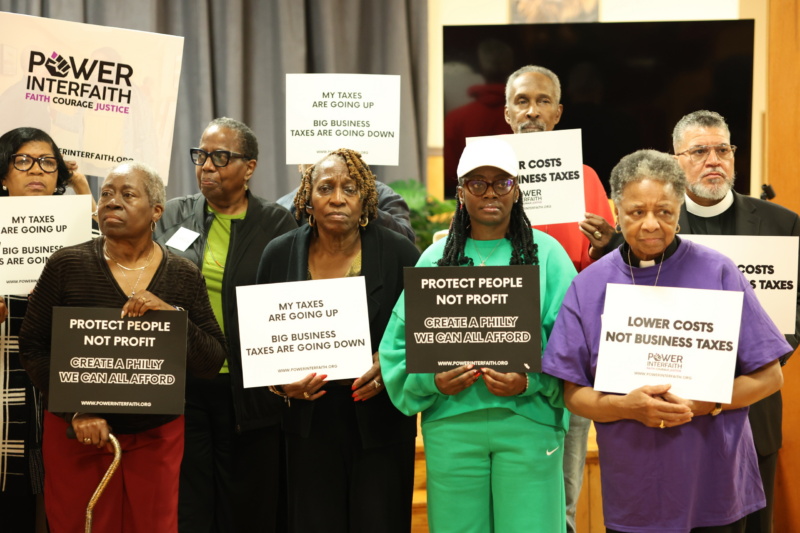
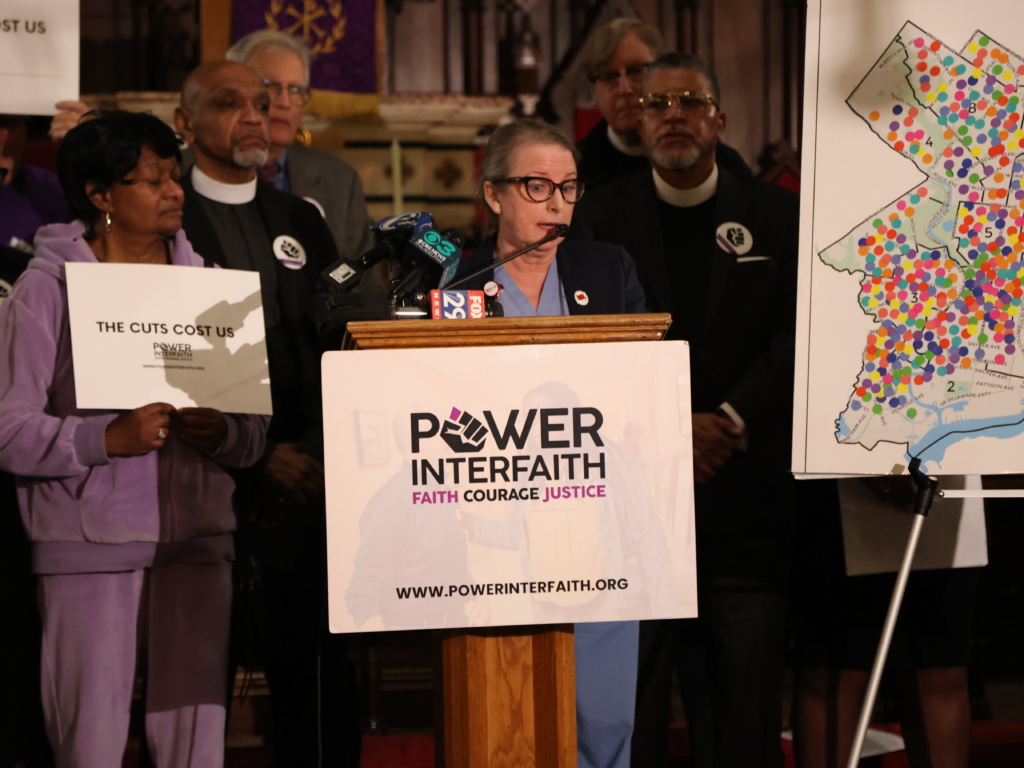
PHILADELPHIA – This morning at Arch Street United Methodist Church, POWER Interfaith, Pennsylvania’s largest multiracial, multifaith organizing entity, released the “2026 Philadelphia Affordability Report”, a sweeping analysis of the city’s cost-of-living crisis, and called on City Council to hold emergency hearings to protect residents from rising costs as unprecedented federal budget cuts begin to take hold.
Speaking days after Mayor Parker’s budget address, faith and labor leaders expressed deep concern that the city is not prepared to fill significant budget gaps resulting from state and federal cuts, and the need for increased local revenue will fall on the shoulders of those who can least afford it through higher property taxes.
Philadelphia receives more than $2 billion in federal grants annually, roughly one third of the city’s entire budget. As federal funding is revoked, Philadelphia will face enormous pressure to replace that lost revenue. Increasing the city’s reliance on property taxes was an explicit goal of the Tax Reform Commission, but more than 80% of Philadelphians already struggle to pay their property taxes.
The report, informed by conversations with more than 750 Philadelphians and a 500-person town hall held in February, documents a profound and worsening cost-of-living crisis with housing at its core:
- Residents are struggling with basic housing costs. Two-thirds of Philadelphians say they’ve had to forego another bill just to pay their mortgage or rent. 90 percent say the City is not doing enough to invest in their community’s needs.
- Property taxes are rapidly increasing. Property taxes have increased 110% over the past decade, more than three times the rate of inflation. The median annual property tax bill now tops $2,300, up more than 15% in the past two years alone. And while renters don’t pay property taxes directly, landlords pass those costs straight through in the form of higher rent — meaning Philadelphia’s lowest-income renters, who are disproportionately Black and brown, are bearing the heaviest burden of all.
- Homeownership, once a point of distinction for Philadelphia, is declining. Between 2005 and 2023, Philadelphia’s homeownership rate fell 5.3 percentage points, dropping faster than the nation and many peer cities. The median annual cost of owning a home in Philadelphia has surged 163% over the past decade. And the crisis is falling hardest along racial lines: Black Philadelphians own homes at a significantly lower rate than white Philadelphians – a gap that has been widening for years.
- Renters, who are far more likely to be Black and Hispanic, are under growing pressure. More than 50% of Philadelphia renters spend at least 30% of their income on housing. Median rent for a two-bedroom apartment jumped 20% in just two years from 2021 to 2023 and has continued climbing, with median rent now around $1,885 per month.
Rev. Greg Edwards, Executive Director of POWER Interfaith:
“Holding the line on taxes is not enough of a plan. It’s another stop-gap measure that fails to relieve the burden falling on the backs of working people and leaves the deeper crisis unaddressed. This moment, as painful as it is, is also an opportunity to fundamentally rethink how Philadelphia generates revenue for its people. We cannot keep patching holes while the ship takes on water. Unprecedented federal cuts are already taking hold, and the time to prepare is now, not when the storm comes.”
Rev. Carolyn Cavaness, pastor of Mother Bethel AME Church and leader with POWER Interfaith, said:
“The report that will be put in the hands of all members of City Council will include, lift up, and reflect hundreds of stories that we have collected from our membership and community members showing and even amplifying just how much we are in an affordable crisis. We have a responsibility, City Council has a responsibility, our city leadership has a responsibility to consider alternative policy solutions, to be sure that our city is fully funded and that our city is affordable, not just for some, but for everybody. We come in a spirit of collaboration. We are brother and sister keepers. We are calling on City Council to schedule hearings on this topic, not tomorrow, but as soon as possible.”
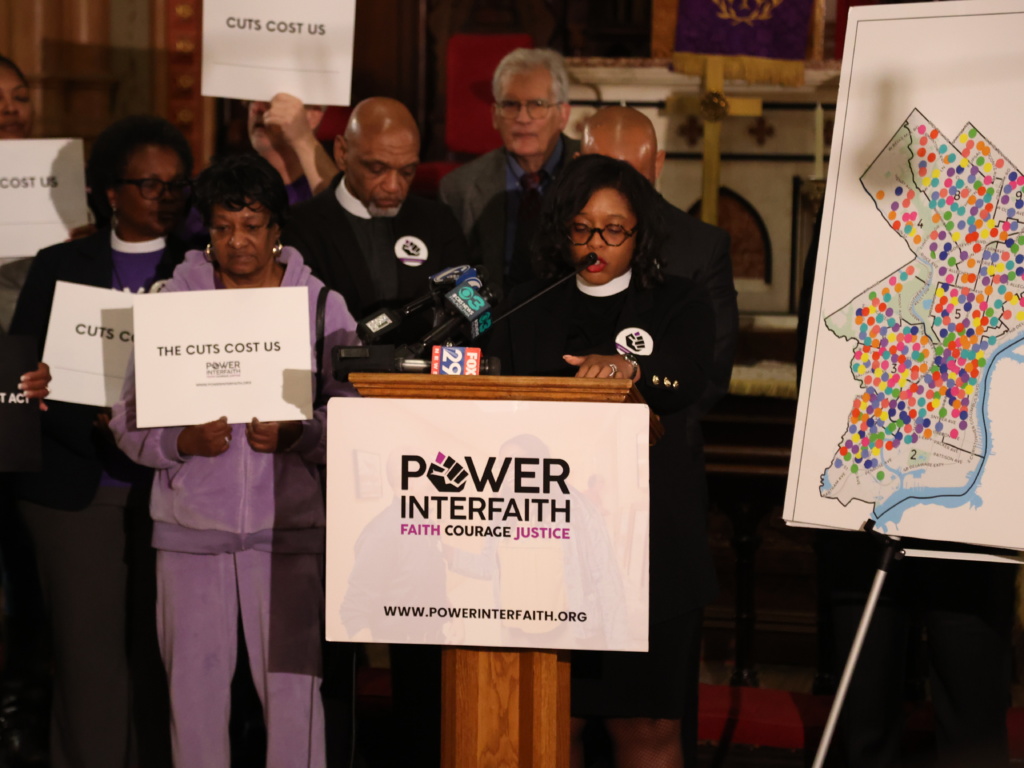
Rev. Jay Broadnax, pastor of Mt. Pisgah AME Church with POWER Interfaith, said:
“There is a storm on the horizon, and our issue is that we are not prepared with long-term sustainable strategies that literally give people the chance to live. Roughly 500,000 Philadelphians rely on SNAP, and roughly 40,000 city residents are getting ready to lose access to food stamps. Another 65,000 Philadelphians will lose or give up their health insurance because of the Affordable Care Act. Folks can’t afford to drive to work anymore because gas is too high, and they can’t afford materials to fix their houses because of tariffs. It’s unaffordable now, and it’s going to be unbearable then. I’m thinking about someone I know, a widow of three young children whose husband passed away last year, working two jobs, filling the gaps with SNAP, but if SNAP gets cut, she doesn’t know how she’s going to feed her kids.”
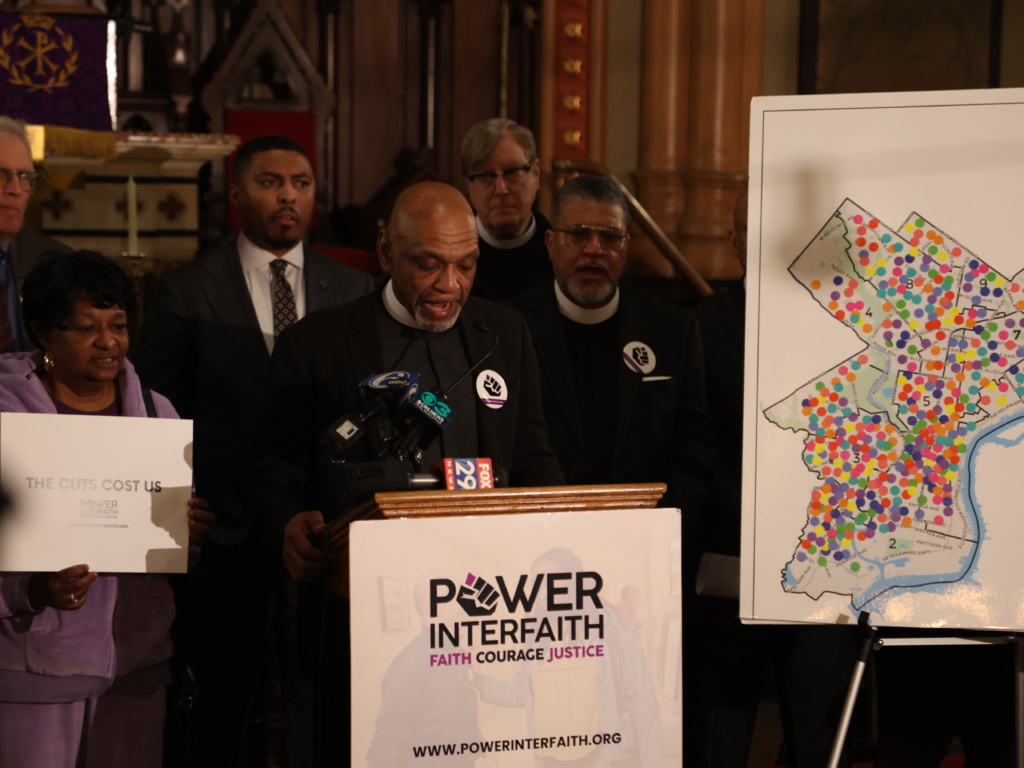
Rev. Cean James, senior pastor of Salt and Light Church and leader with POWER Interfaith, said:
“There are people in this city with full time jobs who sleep in their car every evening – if they can afford that. The price of necessities has doubled in our city in the past 10 years, while the wages of the working class have remained stagnant. Affordability is a moral issue, and what is happening to working people in Philadelphia right now is immoral.”
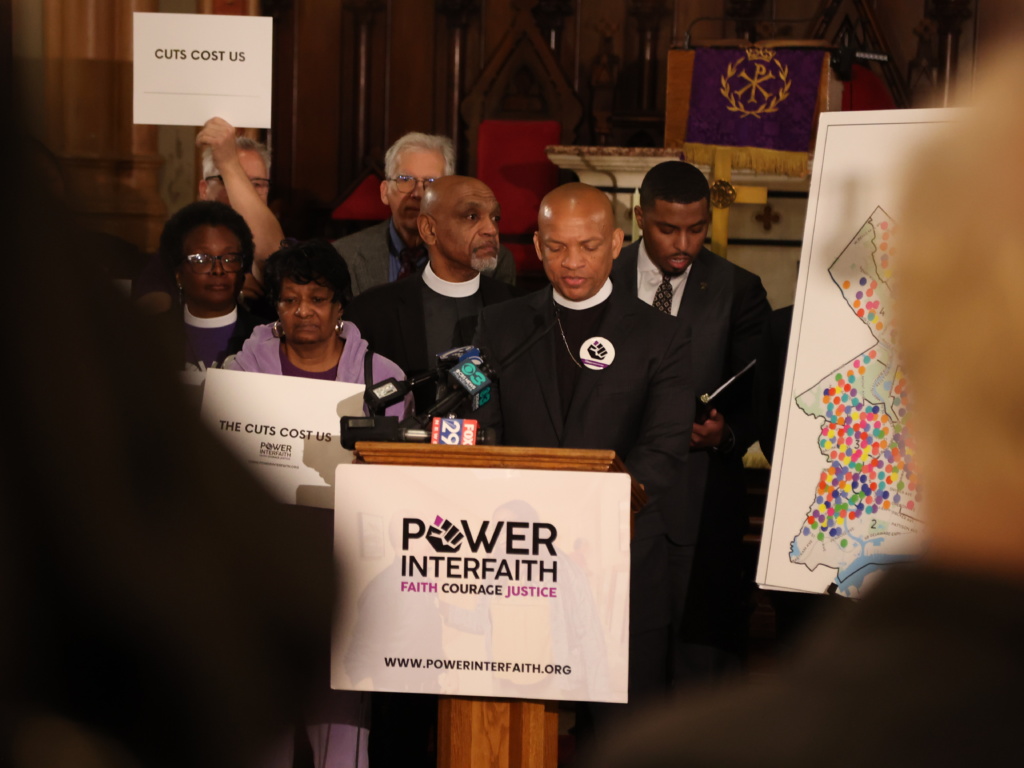
Councilmember Isaiah Thomas said:
“It’s about anticipating possible problems that may come in the future. We’re worried about the decisions that are coming out of D.C. One of the biggest issues in Philadelphia right now is the crisis that we’re facing with our students. We’re looking at the possibility of schools closing and consolidating schools. When we talk about affordability, it’s not just the people who can’t afford to live in the city of Philadelphia. It’s the institutions that we need that are facing significant deficits.”
Maureen May, President of the Pennsylvania Association of Staff Nurses and Allied Professionals, said:
You’ve called on the coming storm…I can tell you the storm is already here. As nurses, we understand something very basic about human life. People need a few fundamental things to live within the day. They need food, they need shelter, and they need health care. We see patients who delay care because they’re worried about paying the bill. We see it in all stages from birth to death when family members bring their loved one to the emergency room and only when things have become completely unbearable because of affordability. We see it in people that have chronic illnesses, whether it’s diabetes, heart disease, asthma – they lose their coverage. And what happens? They become sick and require more resources, and end up worse off if they wouldn’t have had those fundamental needs cared for.”
Rhonda Robertson, member of UNITE HERE Local 274, said:
“I am retired from the state after 25 years and working with the stadium for 19 years now. Figuring after I retire I can sit back and relax. My part-time job is still not like my full-time job. You can’t pull back. It’s just impossible. We have co-workers who have to leave work early because they need to get home. They don’t have cars. I have a sister with a disabled son and daughter – she’s struggling. Their medical assistance got cut off, and her son was in the hospital – and so was she. What do you do? Right after that, we faced another affordability issue with water. With the weather, now we have infrastructure problems in the house. It’s a lot.”
Click here more information on POWER Interfaith’s affordability campaign.
Press coverage can be found here:
###
POWER Interfaith is Pennsylvania’s largest multiracial, multifaith, multigenerational organizing entity. More than 4,700 Pennsylvanians of faith and moral courage are part of this growing movement, coming together across differences to fight for racial and economic justice, a healthy planet, and a stronger democracy. From Philadelphia to Montgomery, Chester to Lancaster, Bucks to Lehigh, and Delaware Counties, we believe that every person has inherent worth and dignity, and that our faith traditions call us to act with boldness and hope. Through faith-rooted organizing, public action, and community-building, we’re working towards a Pennsylvania where everyone has what they need to live and thrive. Learn more at www.powerinterfaith.org.

